




























Without much effort, students hear about the SAT long before anyone ever logs into Bluebook. It slithers through conversation in the hallway and hides between GPA comparisons among peers. Before they even sign up for a testing date, the test takes on a role far bigger than just measuring college readiness.
After interviewing students across different grades, it was clear that most of them see the test as an informal ranking system, influencing how they view themselves and each other.
For instance, the first word junior Milan Brown thought of when prompted to think about the SAT was ‘stress.’
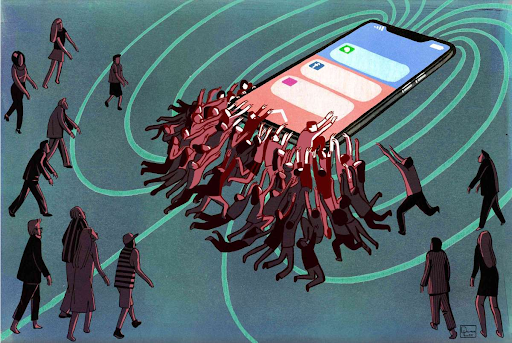
Brown said that studying for the SAT forces students to “hold yourself to a certain standard,” especially when TikTok influencers consistently advertise their studying routines in getting their 1550. Social media posts about these perfect scores create what Brown described as “constant reminders” that make students question their abilities.
“When you don’t hit the same benchmarks as you see online, it definitely makes you doubt yourself,” Brown said.
Among seniors, however, perspectives shift. Michael Ryan, a senior who completed the SAT twice, described feeling “content,” with his scores and said he believes colleges are once again gradually placing more emphasis on standardized testing.
Ryan said preparing for the test made him aware of gaps in his earlier education, which affected his confidence at times. Still, he said the process ultimately helped him feel more grounded heading into college applications.
Certainly, a high score could open doors for colleges, but it also creates a whole separate identity for that student: The ‘top scorer,’ or ‘the student who didn’t download Crackd to study and got a 400.’
Even juniors who haven’t started the college process yet feel this pressure. Junior Emma Walter said she’s nervous mostly because the SAT gets “submitted directly into colleges,” but also because people act like it’s a definitive indicator of effort. The SAT becomes a way for students to silently assess their own academic identities.
Now imagine snapping your fingers and removing it entirely. Imagine no more practice tests or scrolling through TikTok rabbit holes comparing percentiles. In theory, that should make everyone breathe easier.
Nevertheless, the students interviewed painted a different picture.
When asked what might happen if the SAT disappeared tomorrow, Ryan says that kids who have “gotten a good score would probably feel less confident because then they can’t boast about their high achievement.” His statement suggests that a singular number can become the catalyst for unconfident kids.
On the flip side, Ryan said that for the lower-scoring students, removing the SAT would make them feel better about themselves because the clear “difference between their level of knowledge and someone else on a higher level” is stripped.
These students would lose some of the only concrete proof of their achievement that they feel they have, and the opposite occurs for others who would suddenly be free from the constant comparison. Ultimately, that emotional split reveals the real root of the problem, being that the SAT just acts as something absolute in an unpredictable college admissions process.
Students have let a single Saturday morning exam act as a measuring stick. Worse, they’ve let it decide how confident they’re allowed to feel. Until schools find better alternatives to evaluate students, this standardized test will continue to measure identity instead of intelligence. That’s the real test we’re taking.