


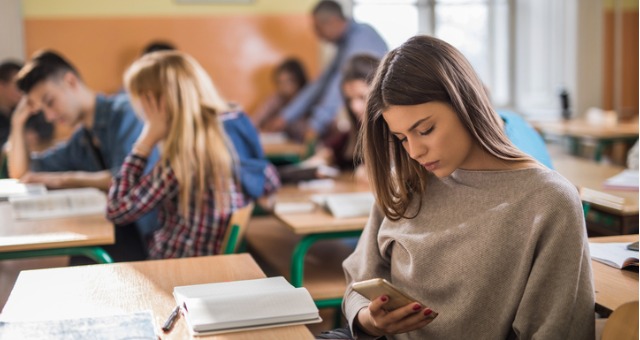








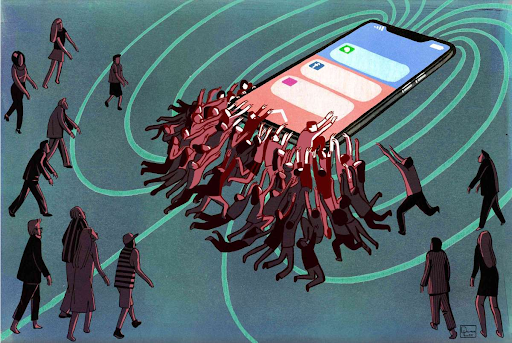












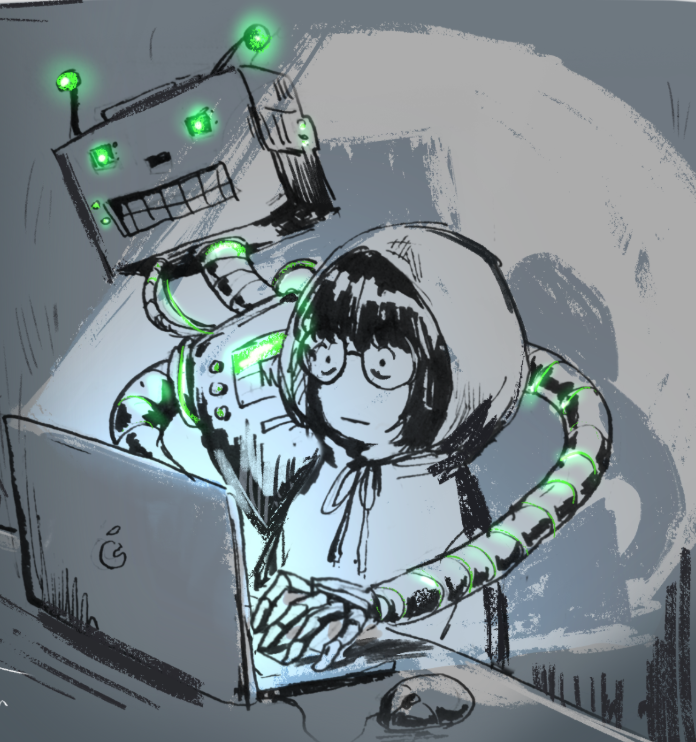
With the rise of artificial intelligence over the past few years, the majority of people have started using AI on a daily basis for various tasks. Some are students who need AI to check their assignments, some are people who just have questions, and others are people who completely cheat on their assignments. AI tools are robbing students of their ability to think critically by leading them to use shortcuts for learning. If we care about their future, we must get rid of the ability to use AI on school assignments.
According to a 2025 YouGov survey, for adults under 30, 76% of them claimed to use AI for general usage, while 50% claimed to use AI weekly (Harris et al.). This constitutes the majority of the young population, who all use AI for certain things throughout the week. Another study showed that AI usage middle school and up increased from 48% in May 2025 to 62% in December 2025 (Schwartz and Diliberti). This shows that among students, the use of artificial intelligence has gone up dramatically in less than a year. Almost everyone has used AI at least once, and as its influence continues to increase in the classroom, it’s important to state the consequences of its presence among students.
Now what exactly are the consequences of overusing artificial intelligence? Studies show that overreliance on AI tools lead to a “lack of skill development, reduced cognitive engagement, and ethical and academic integrity concerns (Davis-Bibb).” Students who utilize AI to complete their assignments make work too easy for themselves. Instead of building the skills necessary to do the assignments themselves, they use shortcuts, which get rid of the need to think and find answers on their own. Another problem that comes with AI usage is that it can spread misinformation and bias as well (Davis-Bibb). This can be very dangerous for students who rely on AI to get knowledge, instead of searching for reliable sources. Colleges play an important role in preparing students for the workforce, where writing, problem solving, and understanding various perspectives will be necessary, and if they only do work using artificial intelligence, they’ll never develop those skills.
So how can we prevent AI usage in schools? There are many steps that schools can take to at least limit AI’s ability to help students in the classroom. One solution includes classrooms requiring course-based research, like interviews, surveys, and experiments (Kelley), which are very difficult for AI to produce. Since it’s still possible for AI to produce fake data, students should be required to provide proof of their efforts, like an unedited draft turned in along with a finished essay. Students should also be quizzed on their work and write reflections during class on paper, since it would prevent them from getting away with not learning anything new.
As usage of artificial intelligence increases in the classroom, schools should implement new ways of teaching to prevent students from using AI. It deprives them of learning and developing skills needed for the real world.